
Of course, it is feasible to establish a durable and elegant dwelling on a minimal budget. Through meticulous blueprinting, choosing the materials wisely, and employing a functional design, you are able to maintain thousands of dollars in your pocket and still have a spacious and cozy home. The essential thing is to stick to your budget without letting go of safety or durability.
Planning and Budgeting Early
The proper plan is the foundation of every successful low-budget house. Develop a financial plan that encompasses the cost of land, permission, design, materials, labor, and finishing work. Overspending is a common mistake among homeowners who neglect to monitor the small expenses they add up over time.
That is the point where the quantity takeoffs are very instrumental. This is a service to measure the exact number of materials needed for construction so that there is no wastage or over-purchasing. By implementing the correct mixtures of bricks, cement, steel, or tiles, you can budget with simpler steps and get a lower price from suppliers through negotiations.
Cost Breakdown Example
The following is a budget distribution example when constructing a low-cost house:
| Expense Category | Approximate Share of Budget |
| Land Purchase | 30–40% |
| Foundation & Structure | 20–25% |
| Roofing & Flooring | 10–15% |
| Plumbing & Electrical | 10–12% |
| Finishes & Interiors | 10–15% |
| Miscellaneous/Buffer | 5–8% |
A well-organized plan of this nature will make sure you do not find yourself without sufficient funds halfway through the building process.
Choosing the Right Location
Land prices can be very different, and a good plot can save you lots of money. Normally, it’s going to be more costly to construct a building in downtown areas just because the land there is too expensive, while suburbs or semi-rural areas are going to offer you the cheapest alternatives.
However, it is advisable to balance the cost with convenience – access to roads, utilities, and basic services must be taken into consideration in order not to incur any living expenses in the future.
Selecting a Cost-Effective House Design
The look of your home will be the main reason why you are going to spend a lot of money down the road. A simple, compact design that lacks the use of typical architectural style and structural complexities will surely help in lowering costs. Large balconies, multiple curves, or intricate exteriors should be avoided at all times, as these only serve to increase the labor and material requirements.
Energy-Efficient Designs
Choosing a design that optimizes natural light and ventilation will make a house less dependent on artificial cooling and lighting, and thus, utility bills will be lowered in the future. Small but functional spaces are more appealing than huge ones.
Opting for Simple Floor Plans
Open floor plans can not only make your house look bigger than it really is, but at the same time, you can reduce the number of walls, partitions, and extra materials needed. The presence of fewer corridors or unnecessary rooms means that the amount of cement, bricks, and finishing works needed will be less.
Using Affordable Construction Materials
The selection of the material can either be the cause of your budget being cut or increased. If you are not going to use the most expensive branded materials, instead, find some locally available alternatives that provide quality at lower prices.
Examples of Cost-Saving Materials
- Fly ash bricks or hollow concrete blocks can be used instead of traditional bricks.
- For faster construction, use precast slabs.
- Utilize bamboo or wood made from eco-friendly sources for materials.
Prefabricated and Modular Options
Prefab or modular housing is becoming a trend because it is both time and money-efficient. The factory-made panels or modules can be brought to the site and then easily put together or assembled, thus saving labor costs. In addition to this, the modular way of building also prevents construction waste and ensures the projects are finished in a short time.
Reducing Foundation Costs
The foundation is the basic unit, and even then, you manage to cut back some money by opting for the most suitable kind for your soil. For example, shallow foundations have a lower price than deep ones. A soil test will help you find the right design for the foundation that will not give you any leaks or repairs in the future.
Walls and Roofing on a Budget
The walls of a house take up a large part of the building budget. The use of hollow bricks or bricks produced from stabilized mud, which are light and cheap, can considerably reduce the expenses.
Low-Cost Roofing Options
- Reinforced concrete slabs for long-lasting performance.
- Corrugated tin or steel sheets are an option for temporary or rural houses.
- Ecologically friendly green roofs can be installed in the case of insulation.
Smart Flooring Choices
The situation with flooring is similar to walls- the price can skyrocket very quickly. For a home with a limited budget, polished cement flooring is both good and cheap. Besides marble or hardwood, one can also use basic ceramic tiles or laminates, which are less expensive.
Cost-Effective Windows and Doors
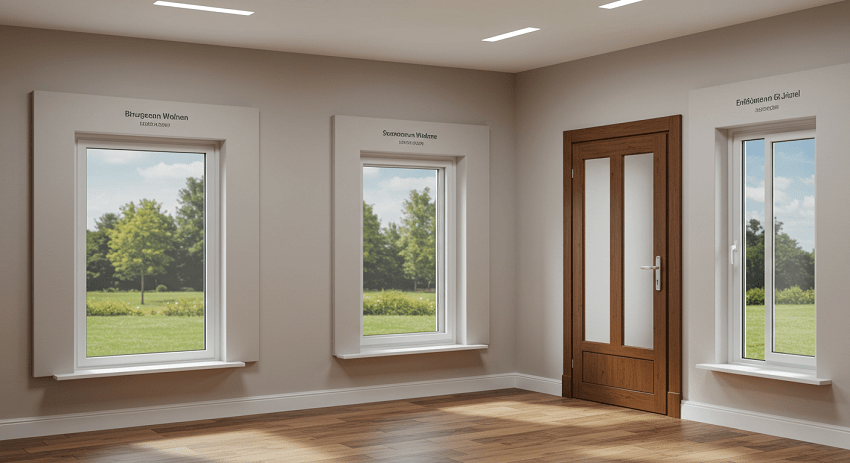
In most cases, wooden doors and windows made in a traditional way cost a lot. Just look at steel, aluminum, or PVC products for your doors and windows. Not only are they more affordable and durable, but doors and windows made in advance for quick installation will also be a great way to save house and people money.
Plumbing and Electrical Work in the Budget
Wiring and plumbing should be planned ahead of time, along with the building design. If you decide to change them later, you will be charged more. Use standard fittings instead of those from high-end brands. For instance, a simple but strong tap or switch can do the same job as a designer one at one-fifth of the price.
Energy Efficiency to Save Costs Long-Term
Going for energy-efficient means will raise the initial expenses a little but will save much more in the future. Solar panels, LED lamps, proper insulation, and rainwater harvesting technologies reduce the bills and the need for external resources.
DIY and Sweat Equity
One of the easiest ways that you can reduce labor costs is to do some of the finishing jobs on your own. Painting, garden landscaping, or tiling a small area are simple tasks that you can manage without hiring a professional. Not only does it lower the expenses, but it also makes your house uniquely yours.
Buying the Best Contractor
The contractor is the one who agencies the budget control. Always check out several prices and take your pick. Getting a well-defined contract with unambiguous terms will help avoid extra fees. Find the contractors who are well-experienced in constructing buildings with cost-saving techniques rather than luxury ones.
Recycling and Reusing Materials
Use of recycled materials in construction can reduce the overall costs of the project by 10-20%. Most of the time, bricks, wood, and tiles from the old houses can be reused. There are a lot of places where destroyed buildings are selling the materials taken out of the buildings at a cheap rate. In this way, using recycled things is not only good for the environment and the economy.
Minimal Interior Finishes
One of the quickest ways to turn interiors into a nightmare for your budget is when you are less cautious. You do not necessarily have to go for countertops made of marble or luxury wardrobes; just select your finishes to be simple. A good kitchen with modular cabinets, standard bathroom fittings, and painted cement walls can be both trendy and affordable.
Government Schemes and Housing Loans
In many instances, various government administrations offer cost-effective housing projects, help, or give tax incentives for cheaper homes. Before starting, take a look at such alternatives. A loan to buy a house at a low-interest rate or rural development programs are also good ways to give you more power over your budget.
General Mistakes to Be Aware of in Building Low-Cost Houses
Individuals make mistakes that people could easily avoid by just spending more money than they intended. Over-customizing the design, you might also use the materials that have luxurious properties and are unnecessary for the house and even through the hiring of unverified contractors can lead to cost increase at the same time of your project. Affordability should always coexist with durability – materials that are cheap and require frequent maintenance will eventually cost you more.
Conclusion
To put up a house with a limited budget, one has to be strategic in every decision that they make. Every aspect, from planning and picking materials to energy efficiency and the wise use of labor, indirectly affects the final price. The catch, however, is to make the house not only low-cost but also capable of withstanding the tests of time, remaining functional, and being future-proof.
FAQs
Q1: What Is The Cheapest Type Of House To Build?
Small single-story homes with simple layouts and minimal finishes are usually the cheapest to construct.
Q2: How Can Quantity Takeoffs Save Money In Home Construction?
They provide accurate estimates of material requirements, reducing wastage and helping you buy only what is needed.
Q3: Are Prefabricated Houses Durable?
Yes, modern prefab houses use strong materials and meet safety standards, making them both durable and affordable.
Q4: Can I Really Save Money By Doing Diy Work?
Yes, handling tasks like painting, tiling, or landscaping yourself can reduce labor costs significantly.
Q5: What should I avoid in low-budget construction?
Avoid unnecessary luxuries, over-customization, and hiring contractors without proper verification.